St Martin / St Maarten practical tips: local time, currency, driving and the border
Published October 30, 2026 · Updated on October 30, 2026
St Martin has two sides, two currencies and two airports, yet you get around it as one island. Before you land, here is what to know about St Maarten time, money, driving and moving from one side to the other.
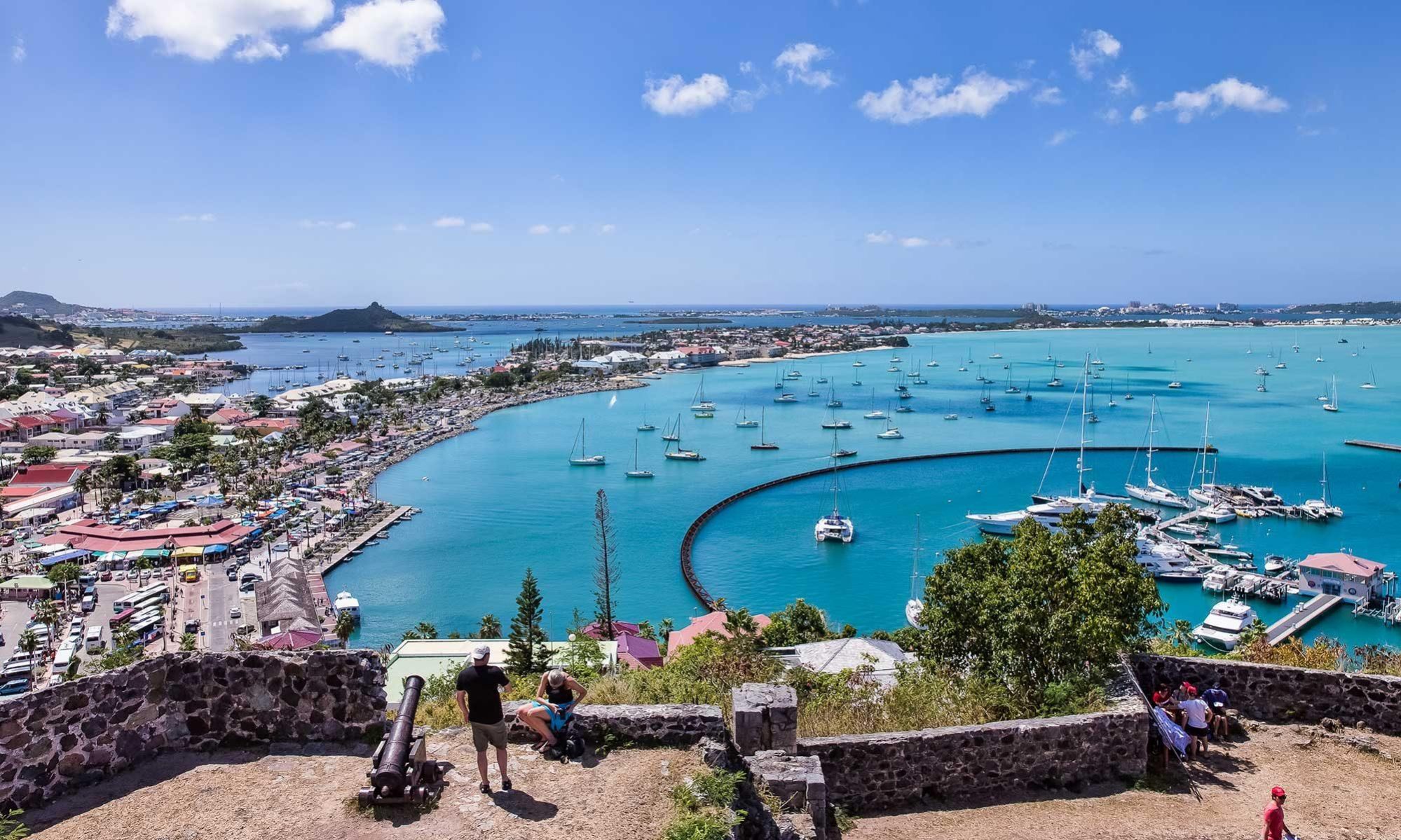
What time is it in St Maarten?
St Martin runs on Atlantic Standard Time (UTC−4) all year round: there is no daylight saving time. The time is the same on the French and Dutch sides, and the same as in Puerto Rico, Guadeloupe and Martinique.
Because the island never changes its clocks, the St Martin time zone difference depends on the season where you live:
- From New York, Boston or Montreal: the same time from March to November, one hour ahead in St Martin for the rest of the year.
- From London: 4 hours behind during UK winter time, 5 hours behind during British Summer Time.
- From Paris: 5 hours behind in French winter time, 6 hours behind in summer.
Most flights from Europe land in the afternoon, local time. Plan to collect your car and reach your accommodation before dark, as night falls early in the tropics.
Which currency is used in St Maarten and St Martin?
Each side has its own currency:
- French side (Saint-Martin): the euro.
- Dutch side (Sint Maarten): the Caribbean guilder (XCG), which replaced the Netherlands Antillean guilder in 2025. It is pegged to the US dollar at a fixed rate: 1 dollar is worth 1.79 guilders.
In practice, the US dollar is widely accepted on both sides of the island. When you see a price, just check which currency it is in: it is often the clearest sign that you have changed sides.
Crossing between the French and Dutch sides
The island is shared between France and the Netherlands, but there is no border to cross: no post, no checks, the road simply continues. You change sides without noticing, apart from the signs, the currency and sometimes the language. You can sleep in Grand-Case, have lunch in Philipsburg and spend the afternoon at Orient Bay, all in one day.
As for language, French is spoken on the French side, Dutch and English on the Dutch side, and English is understood everywhere on the island. To get to know the island and what sets its two sides apart, see our introduction to St Martin island.
Driving in St Martin
You drive on the right, on both sides of the island. Main roads are in good condition; secondary roads are narrower and winding, nothing that calls for a special vehicle, just relaxed driving. In downtown Marigot and Philipsburg the streets are narrow and parking can be hard to find: a small car is easier there.
Your driver's license
At Golfe Car Rental, licenses from the European Union, the United States and Canada are accepted as they are. For other countries, you need an international driving permit along with your national driver's license.
The Simpson Bay bridge
It surprises many visitors. A drawbridge crosses the entrance to the Simpson Bay lagoon, on the road running past Juliana airport. It opens several times a day to let boats through, and traffic stops completely while it is up. Openings are at 8:30, 9:30, 10:30 and 11:30 am, then at 2, 3, 4 and 5 pm. These times can change with tides and season: if you have a flight to catch, leave some extra time.
Should I rent a car in St Martin?
The island is small, but what you come for is spread out: beaches are on every coast, Marigot and Philipsburg are each on their own side, and the best spots in Grand-Case or Orient Bay are not on the same route. A car lets you combine it all at your own pace, and cross from one side to the other as often as you like.
Good to know: you arrive in St Martin through one of two airports, Juliana (SXM) on the Dutch side for international flights and Grand-Case (L'Espérance) on the French side for regional flights, or by ferry at the Marigot and Oyster Pond terminals. At Golfe Car Rental, the car is handed over as soon as you arrive, at Juliana airport as well as at Grand-Case airport.
Frequently asked questions
No, and that keeps things simple: St Martin stays on UTC−4 all year. It is your own clock that changes, so the difference with New York is zero in summer and one hour in winter.
Yes, US dollars are widely accepted on both sides of the island, alongside the euro on the French side and the Caribbean guilder on the Dutch side.
On the right, as in the US and continental Europe, on both the French and Dutch sides.
Yes. There is no border post and no check between the French and Dutch parts: the road simply continues, on foot or by car.